
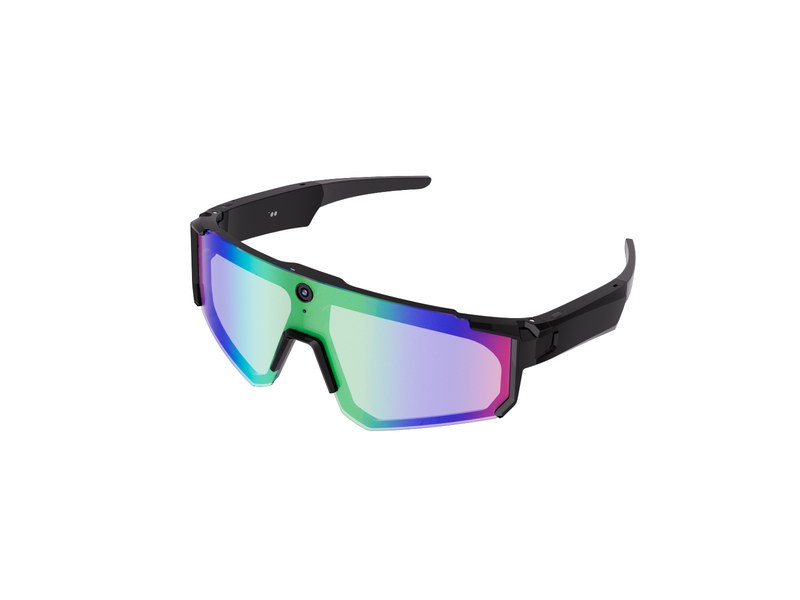
If you are planning to bring smart glasses to the European or North American market, the certification process can take anywhere from two to six weeks depending on the features packed into the frame. Unlike basic Bluetooth earphones, smart glasses combine optical components, wireless modules, batteries, and in some cases cameras — which means multiple regulatory bodies get involved.
Every model we manufacture at Besteye goes through a structured compliance check before it ships. This article breaks down the specific certifications each pair of smart glasses needs to carry, and what each one actually tests for.
CE Marking — European Market Access
Any electronic product sold in the EU needs CE marking. For smart glasses, there is no single directive that covers everything. You typically deal with three:
Radio Equipment Directive (RED) 2014/53/EU
This applies because smart glasses transmit via Bluetooth or WiFi. RED covers three areas: effective use of the radio spectrum, electromagnetic compatibility, and basic safety. The product goes through ETSI standards like EN 300 328 for 2.4 GHz equipment. The key tests are output power, spurious emissions, and receiver blocking.
Low Voltage Directive (LVD) 2014/35/EU
If the glasses run on a battery with voltage above 75V DC — which is basically none of the consumer smart glasses — LVD applies. Most smart glasses use a small Li-Po cell around 3.7V, so LVD does not strictly apply. But many manufacturers still include LVD-style testing for safety margin, specifically EN 62368-1 which covers audio/video and IT equipment. This covers mechanical strength, temperature rise, and fire enclosure requirements.
EMC Directive 2014/30/EU
Electromagnetic compatibility testing checks that the glasses do not emit excessive interference and that they keep working when exposed to external RF fields. This matters especially when the glasses have speakers, antennas, and a camera operating simultaneously.
FCC — United States Market
The U.S. requires FCC Part 15 certification for intentional radiators — which includes any Bluetooth or WiFi transmitter. Smart glasses fall under Part 15.247 for Bluetooth LE / Classic and Part 15.407 if WiFi is included.
FCC testing is done by accredited labs. The device must show conducted and radiated emissions within limits, plus RF exposure compliance. This last one — SAR (Specific Absorption Rate) testing — applies when the device is used within 20 cm of the head. Smart glasses sit directly on the face, so SAR testing is mandatory. The FCC limit is 1.6 W/kg over 1 gram of tissue.
We have seen some glasses designs barely pass SAR because the antenna was placed too close to the temple, right where the frame touches skin. Moving the antenna feed point by 3–4 mm made a measurable difference in the test results.
RoHS & REACH — Material Compliance
RoHS (Restriction of Hazardous Substances) limits lead, mercury, cadmium, hexavalent chromium, PBB, and PBDE. For smart glasses, the main concern is the soldering on the mainboard and any plating on the metal components. REACH is broader and covers SVHC (Substances of Very High Concern), which can include certain plasticizers in the frame material and flame retardants in the charging case.
European importers are increasingly asking for full material declarations, not just a RoHS certificate. We maintain a rolling compliance matrix for every component used in our production.
IP Rating — Water and Dust Resistance
Smart glasses with an advertised IP54 rating have been tested against limited dust ingress and water splashes from any direction. Most audio smart glasses fall in the IP54 to IP55 range. The test is straightforward — dust chamber and water spray — but the design challenge is sealing the USB charging port and any vent holes for the speakers.
IPX4 (water only, no dust) is the most common for everyday smart glasses. True waterproof smart glasses are rare because the acoustic chamber for open-ear speakers needs airflow to function.
UN38.3 — Battery Transport Safety
The lithium polymer cell inside smart glasses must pass UN38.3 before it can be shipped by air. This covers altitude simulation, thermal cycling, vibration, shock, external short circuit, impact, overcharge, and forced discharge. Most battery suppliers provide UN38.3 test summaries with their cell. If you are customizing the battery shape or capacity, new testing may be required.
We ran into a situation once where a custom curved battery pack had to go through full UN38.3 again because the supplier changed the electrolyte formulation slightly. The testing added three weeks to the timeline.
What Changes with AI and Camera Models
Smart glasses with an integrated camera introduce additional compliance requirements. In Europe, the camera module may fall under the GPDR and privacy regulations depending on how it is marketed. The device may need a privacy shutter indicator. In China, camera-equipped smart glasses must comply with cybersecurity review requirements if they have network data transmission capabilities.
In the U.S., camera glasses sold in certain states need to meet specific biometric privacy laws, especially Illinois (BIPA) and Texas. This is not a certification per se, but non-compliance has led to class-action lawsuits.
Bottom Line
Certifying smart glasses is more involved than certifying a standard Bluetooth audio device because you are dealing with optics, radio, battery, and potential camera modules in a compact space. Plan for 6–8 weeks for CE and FCC combined, with an extra 2–3 weeks if SAR testing is needed. Having a pre-compliance scan before the official lab test saves time. We run internal pre-scans at the prototype stage, so when the final product goes to the accredited lab, there are fewer surprises.
If you have specific questions about certification for your smart glasses project, contact our team.