
From sample to mass production: the 90-day OEM timeline explained
Sample rounds, tooling, EVT/DVT/PVT, certification and inspection — what happens in each stage, how long it really takes, and the three places programs lose six weeks.

Ninety days is a realistic span from approved sample to goods leaving the factory — for a TWS earbud, an open-ear set, a compact Bluetooth speaker or a translation device. Ninety days is not the average, though. It is what the schedule looks like when nothing waits on a decision. Programs that run past 120 days rarely lose that time on the production line. They lose it standing still: a BOM nobody froze, a colour reference nobody signed, a battery certificate nobody ordered until the goods were already packed.
The clock starts on sample approval, not on your inquiry
Buyers usually count from the day they sent the RFQ. Suppliers count from the day they received a signed sample and a deposit. Between those two dates there is often a month of quotation rounds, and that month is invisible in every schedule you will be given.
So agree the start line in writing. The line we use is: Day 0 = the date the golden sample is signed and the deposit clears. Everything below is measured from there.
The four phases

Phase 1 — Spec lock and sample rounds (Day 0–20)
If the product is a variant of an existing design, one sample round is often enough. If it is a new shell, expect two, and budget for three. A sample round is 7–12 working days, and a revision adds 5–8 more on top. Those numbers only hold when the change is small. Swap the driver or move the antenna, and you have restarted the round.
The deliverable from this phase is not a sample. It is a frozen document set: BOM with part numbers, colour references with tolerances, a firmware version string, and a packaging brief. Freeze it, date it, and put the version number on the golden sample itself.

Phase 2 — Tooling, EVT and DVT (Day 20–45)
This is the phase buyers underestimate most. Two things run in parallel and both are long-lead.
- Tooling. Injection tools for a charging case or an earbud shell typically take 15–25 days to cut and test. The first shots off a new tool are never production-ready — they need steel adjustments, and each adjustment cycle costs 2–4 days.
- Compliance testing. CE, FCC and RoHS reports run 2–4 weeks. If the product has a lithium cell, UN38.3 plus a transport MSDS is 3–5 weeks, and it is the single longest item in most projects.
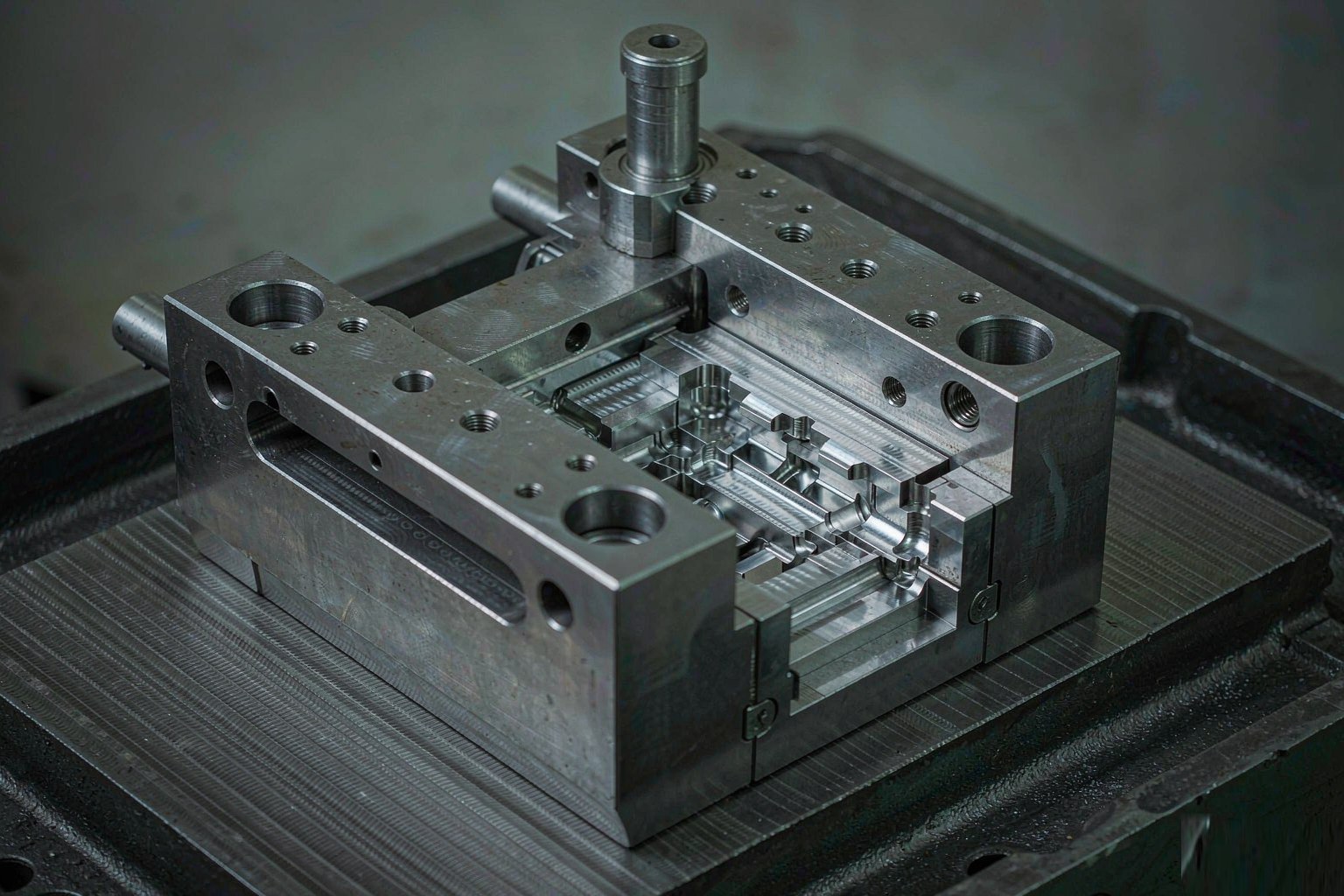
EVT (engineering verification) confirms the design works at all. DVT (design verification) confirms it works to spec, on the real tool, with the real components. Skipping DVT is the most expensive shortcut in this article — see the stance section below.
Phase 3 — PVT: the trial run that decides everything (Day 45–68)
PVT is a pilot build on the actual line, usually 100–200 pcs, staffed by the people who will run the mass order. It answers questions a sample cannot: how long does one unit take, where is the bottleneck, what is the first-pass yield.
Two things to insist on here. First, a golden sample signed by both sides, kept by both sides, with the same firmware and the same materials as the PVT units. Second, the PVT yield number in the report. If the factory will not tell you the first-pass yield, that is your answer.
Phase 4 — Mass production, inspection, booking (Day 68–90)
Production of a 1,000–5,000 pc order is usually 15–30 days on the line. That runs alongside packaging, which is its own critical path: printed gift boxes take 12–18 days to produce after artwork is approved, and colour proof approval alone adds 5–7 days.
Then pre-shipment inspection, then booking. Air freight moves in 5–10 days; sea freight is 25–35 days to most destinations and is booked days in advance, not on the day the goods are ready.

Where the 90 days actually breaks
Three failure modes account for almost every late program we see.
- A spec change after tooling starts. Changing a housing colour after the tool is cut means a new tool or an irreversible paint spec. Changing a PCB layout after the tool is cut means both. Either one is weeks, not days.
- Packaging artwork approved late. This is the most commonly forgotten critical path item in the whole schedule. Electronics are ready; the boxes are not. Nobody notices until week 12.
- Certification ordered after PVT. If the compliance lab only receives the units on day 55, you have added a month to a plan that assumed certificates existed on day 45.
The gates: what you should be holding on each date
| Day | Gate | What you must have in hand |
|---|---|---|
| Day 0 | Golden sample signed | Signed sample, frozen BOM, deposit cleared |
| Day 20 | Design frozen | Tooling released, compliance samples dispatched to lab |
| Day 45 | DVT passed | DVT report, packaging artwork approved and signed |
| Day 68 | PVT complete | PVT yield data, production golden sample, ETD confirmed |
| Day 90 | Goods shipped | Inspection report, certificates, booking confirmation |
Two things factories usually do not volunteer
Who owns the tooling. If you did not pay for the tool separately, you probably do not own it — which means you cannot move the product to a second factory later without starting over. Ask before you sign, not when you want to leave.
Component substitution at PVT. A pilot build is where an unannounced swap is most likely: a different driver, a different battery cell, a pin-compatible chip from a second source. It is not always bad faith — capacity shortages happen. But it must be declared, because an undeclared swap invalidates the compliance test you already paid for. Ask for a PVT BOM comparison against the frozen BOM, line by line.
Our stance: do not compress DVT, and do not trust a verbal date
Two positions we hold without much flexibility.
First, do not compress DVT to hit a launch date. Skipping or shortening it moves the failure from the factory floor to your warehouse, where rework is impossible and returns are your problem. A four-week slip in development is cheaper than a 3% field failure rate on a product you cannot recall.
Second, do not book a marketing launch, a trade-show slot or a shipping container off a verbal sample date. We had a client who committed to a distributor launch event based on a factory's spoken promise of "45 days, no problem". The tooling ran long, the packaging proof ran long, and the goods arrived five weeks after the event date. The distributor did not cancel — but the shelf space went to a competitor's product for a full quarter.
The tell is simple. If a factory promises a brand-new tooled product in 45 days, one of three things is true: they are reusing an existing mould rather than making yours, they are skipping the trial run, or they are guessing. All three are worth a follow-up question.
Doing it again
Repeat orders are a different schedule entirely — roughly 25–40 days, because tooling, firmware and certificates already exist. The mistake is treating the first order's timeline as the permanent one, and equally, treating the repeat order's timeline as available before the first order has shipped.
If you are planning a first production run and want a realistic date instead of an optimistic one, send us the spec and the target market. We will tell you where the long-lead items are before you commit.
Planning a first production run?
We run the full sequence with vetted Shenzhen partner factories — tooling, EVT/DVT/PVT, compliance testing, AQL pre-shipment inspection and export paperwork, under NDA for custom designs. Most inquiries get a reply within one business day.
See our OEM / ODM services →